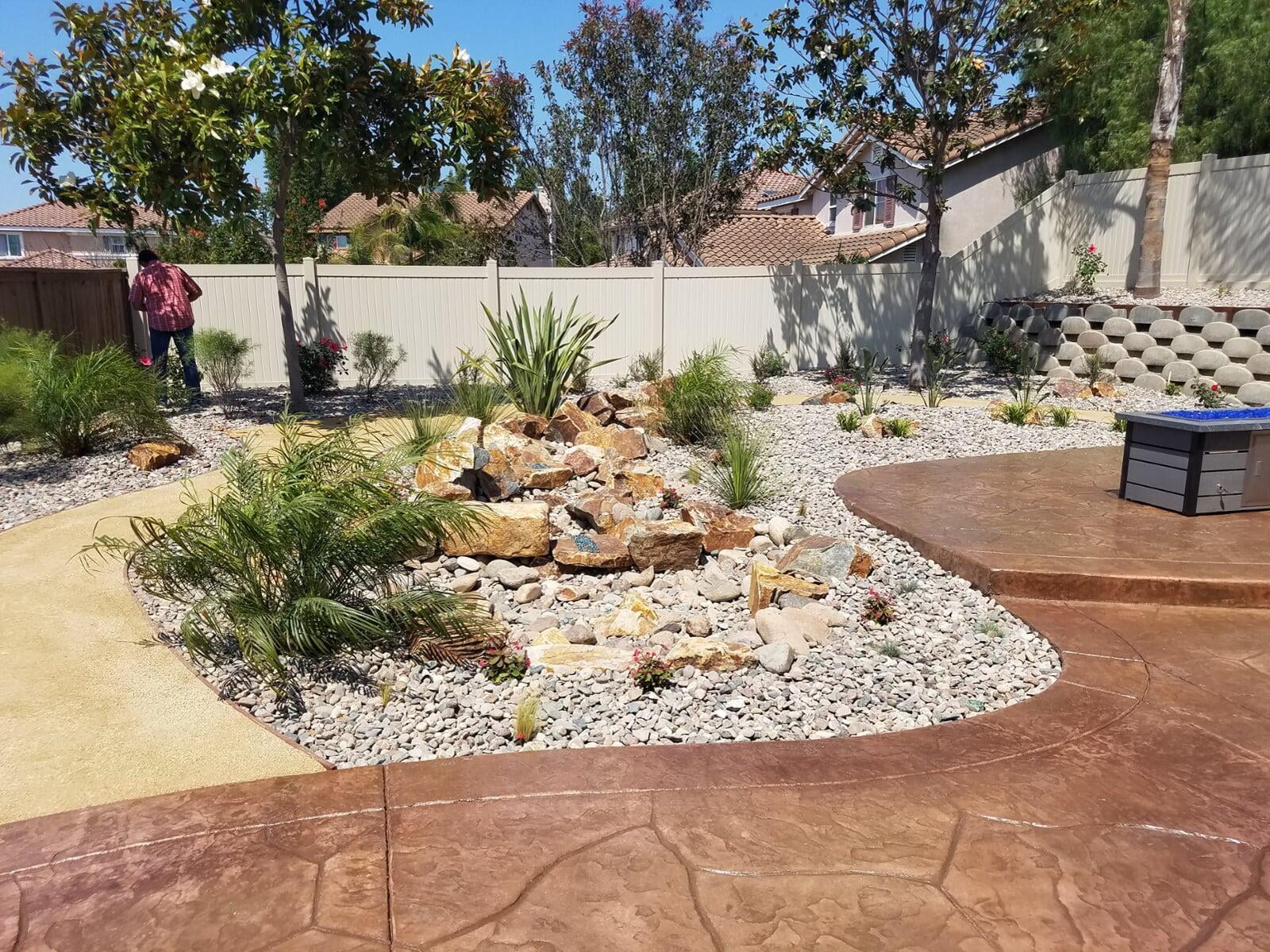
Standing water in the yard is almost never the real problem. It is the symptom. The real problem is under the ground: how the lot was graded, what the soil does when it gets wet, and where the water was supposed to go but doesn’t. Fix the symptom and it comes back. Fix the grade and the outlet, and it stops for good.
San Diego makes drainage easy to ignore. We get most of our rain in a handful of storms, so a yard can look fine for months and then pond six inches against the house in a single February afternoon. By then the damage, slow soil movement, a cracking slab, water wicking into the foundation, has already started. Here is how to read what your yard is telling you, what you can check yourself, and where the line is between a weekend fix and a structural job.
The symptoms worth taking seriously
A few of these are cosmetic. Most are not. If you see more than one together, the water has a path it shouldn’t.
- Water pooling against the house or pad more than a day after rain
- A musty smell, efflorescence (white mineral crust), or damp lines low on exterior walls
- Soil pulling away from the foundation, or new cracks in a slab, patio, or driveway
- Mulch, gravel, or soil washing across hardscape and collecting in one corner
- A lawn that stays soggy for days, or moss and algae in a spot that never dries
- A retaining wall that is bowing, leaning, or weeping water through the face
What’s actually causing it
Backyard drainage failures in this county come down to a short list of root causes, usually more than one at once.
The lot is graded toward the house
Soil should fall away from the foundation, roughly six inches over the first ten feet. Builders cut corners, settling reverses the grade over time, and a later landscaper raises the soil line with planting beds. Now the yard funnels water back to the slab.
The soil is clay, and clay holds water
Much of inland San Diego sits on expansive clay that swells when wet and shrinks when dry. That movement is what cracks slabs and tilts walls. Water that can’t drain off the surface soaks in and makes the movement worse.
There is no real outlet
This is the one most surface fixes miss. A drain or swale that doesn’t connect to a lower, legal point of discharge just moves the puddle a few feet. Water has to go somewhere, downhill, to the street, to a daylight outlet, or it comes back.
Hardscape was poured without a fall
A patio or driveway poured flat, or pitched the wrong way, becomes a shallow basin. The slab looks fine the day it cures and ponds for years after.
Anyone can pour concrete on flat ground and call it a patio. The work is figuring out why the patio keeps flooding, and where the water is supposed to go.
The checks you can do this weekend
You can diagnose a surprising amount with a hose, a level, and an hour after the next rain.
- Watch where it goes. During or right after rain, walk the yard and note where water collects and which way it runs. Photograph it. That map is the whole job.
- Check the downspouts. If they dump within a few feet of the foundation, that is gallons going straight to the slab. Extending them is a real, DIY-able improvement.
- Test the grade. Lay a level on a board running away from the house. If it’s flat or tilts back toward the wall, that is your problem.
- Find the cleanouts. Locate any existing area drains and run a hose into them. If water backs up instead of disappearing, the line is clogged, broken, or goes nowhere.
When it’s past DIY
Extending a downspout or clearing an area drain is fine to do yourself. The line to stop at is anything structural or anything on a slope:
- Re-grading around the foundation
- A French drain that has to tie into a real, permitted outlet
- Any drainage tied to a retaining wall, slope, or canyon edge
- Water moving toward, or coming from, a neighbor’s property
Get those wrong and you don’t fix the problem, you relocate it, often into your foundation or a lawsuit. This is the work other contractors quote and then walk away from, because it’s engineering, not landscaping.
How we fix it
We solve drainage in the same order we build everything: structure first. We walk the property and map where water actually goes, model the grade, and design a system, swales, French drains, catch basins, and a real outlet, that carries water off the lot for good. The retaining and the soil work go in before anything cosmetic. Only then do we build the patio, the planting, and the yard you wanted in the first place. It’s why the work is still draining right a decade later, under the same ten-year structural liability we’ve carried, clean, since 1984.