Fire features that pull everyone in.
Fire pits and full masonry fireplaces that give the yard a place people gather on a cool night — sized for the seating around it, sited out of the wind, and placed where it anchors the space instead of sitting off to the side. San Diego County, since 1984.
Request a Property Assessment →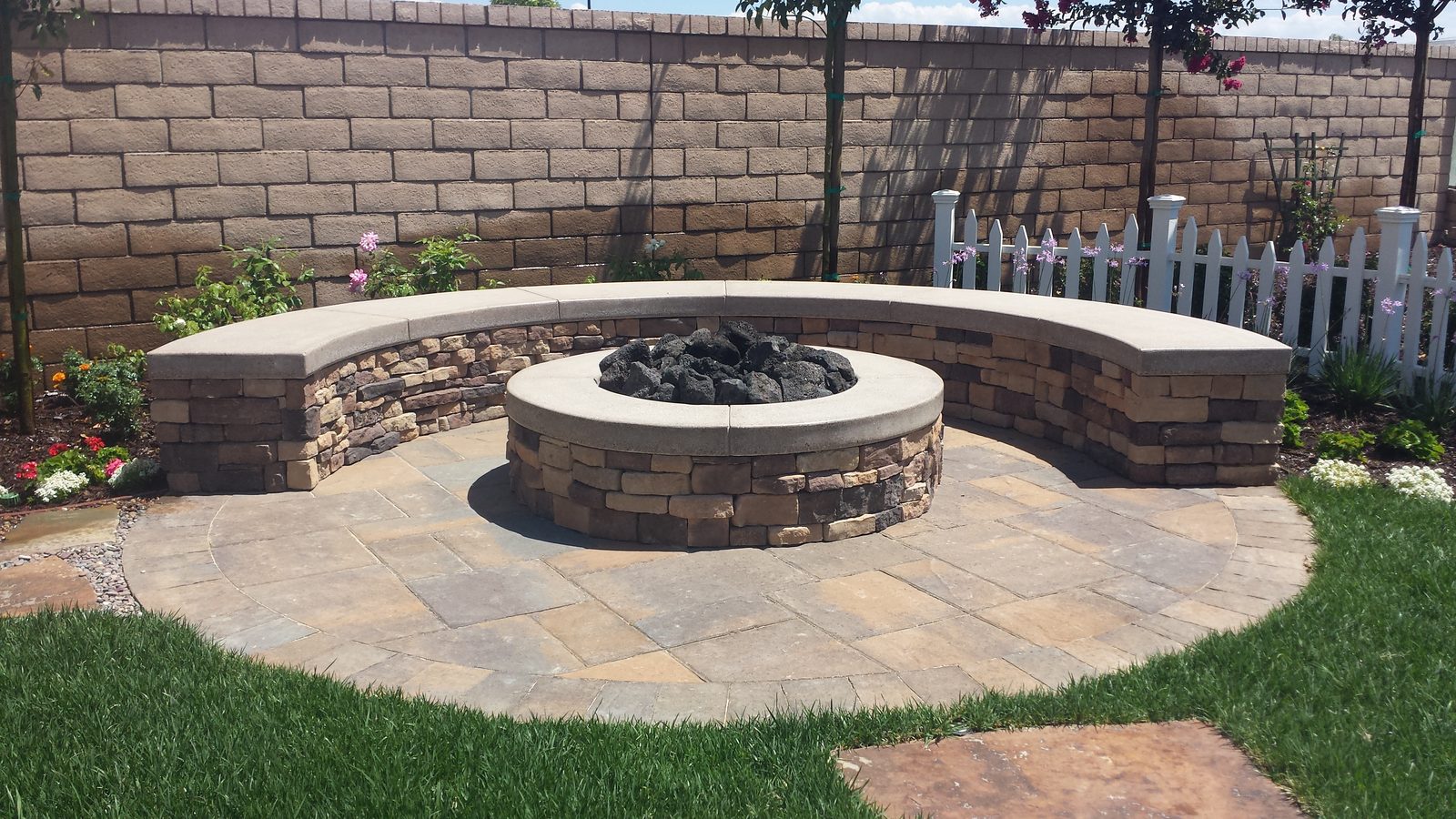
A fire feature makes the room.
A fire pit or fireplace is the thing that decides where everyone sits. Place it well and it pulls the seating around it, turns a corner of the patio into the spot you use on a cool night, and gives the yard a center it did not have. Place it badly — in the wind, too far from where people gather, or backed into a wall where the heat does nobody any good — and it becomes an expensive sculpture. So we start with how you use the space: how many people sit around it, where the seating wants to go, which way the wind comes off the canyon, and whether you want gas at the turn of a key or the real flame and smell of wood.
Then there is the question of gas or wood, and that choice changes what the feature can do and where it can go. Gas runs clean, lights instantly, and meets most HOA and fire-zone rules in the county. Wood gives you the heat and the smell but needs storage, a spark guard, and clearance from anything that burns — and many hillside lots restrict it. We tell you which fits your lot and how you actually plan to use it before you commit.
The structure is what makes it last. A masonry fireplace is tons of stone on a footing that has to be sized to the soil and tied into stable ground, and a fire pit still needs a base that will not settle and crack. On a slope we set the footing and any seat walls first, then build the feature on top. When a layout you ask for will not function — a fireplace fighting the prevailing wind, a pit too small for the seating — we say so and redraw it. We have built this way since 1984, and we carry the ten-year structural liability on every footing we pour.
What’s included.
- A feature sized and sited for the seating around it — placed to anchor the gathering, not sit off to the side
- Gas or wood fire pits set on a footing sized to the soil, with the flame sited out of the wind
- Full masonry outdoor fireplaces with reinforced core, chimney, and firebrick firebox
- Gas line run at code depth, ignition system, pressure test, permit, and inspection
- Stone, manufactured veneer, porcelain tile, or stucco finish over a reinforced structure
- Seat walls and raised hearths with footings and reinforcement
- Dense stone or poured caps, spark guards, and screening where the fire zone requires
- Footing and any retaining work the slope or fill demands, done before the fire feature
- Low-voltage lighting, startup, clearance check, and a walkthrough on safe operation
Our process.
How you’ll gather
We walk the lot and talk through how you want to use it — how many gather around it, where the seating goes, gas or wood — and read the wind and the fire-zone rules for your address. Where it lands gets settled before a single number is priced.
3D & engineering
You see the fire feature in 3D before we build. Geometry, veneer, and hearth get drawn alongside the footing size, the seat-wall reinforcement, and the gas and clearance detailing the code requires.
Footing to finish
Footing, masonry core, gas line, firebox, chimney, veneer, caps, and lighting. Every phase runs in-house, in order, with one crew accountable for the one before it.
Light-up & warranty
We light it, confirm the draft and the clearances, and walk you through safe operation. Then the ten-year structural liability is ours — on the footing, the seat walls, and the masonry.
Why bring us your fire feature.
Forty years, same owner
Darren Earl has been building outdoor masonry in San Diego County since 1984. He has seen which footings hold and which chimneys lean over four decades on this region’s soil and slopes. The owner prices the job and has carried the ten-year structural liability on it for four decades. His in-house crew, not a rotating cast of subs, builds it.
One team, no subcontractors
Most fire features pass through a chain of subs — one pours the footing, one runs the gas, one lays the masonry, one sets the veneer — each blaming the last when the gas fails inspection or a joint cracks. We run every phase in-house. One contract, one number to call, no gap between trades for a problem to hide in.
Ten-year liability, clean record
California holds the builder structurally liable for ten years on the footing and the masonry. We carry that on every fire feature, and we have carried it clean for forty — zero structural complaints. That exposure is why we size the footing and pull the gas permit instead of cutting corners.
Fire questions, answered straight.
Tell us about the fire feature.
Tell us how you want to use it — a fire pit the kids ring on a cool night, a fireplace that anchors the patio, gas or wood — and we’ll look at the spot, place it right, and give you a fixed-price concept. No charge for the visit.
Saturday · By appointment
Sunday · Closed
We’ll be in touch within one business day to schedule the visit.