Outdoor kitchens, built around how you cook.
Outdoor kitchens laid out around how you actually cook, serve, and gather — where the cook stands, where the guests land, how the food gets from grill to table without anyone crossing the heat. Then we walk you through the materials so you spend where it counts. San Diego County, since 1984.
Request a Property Assessment →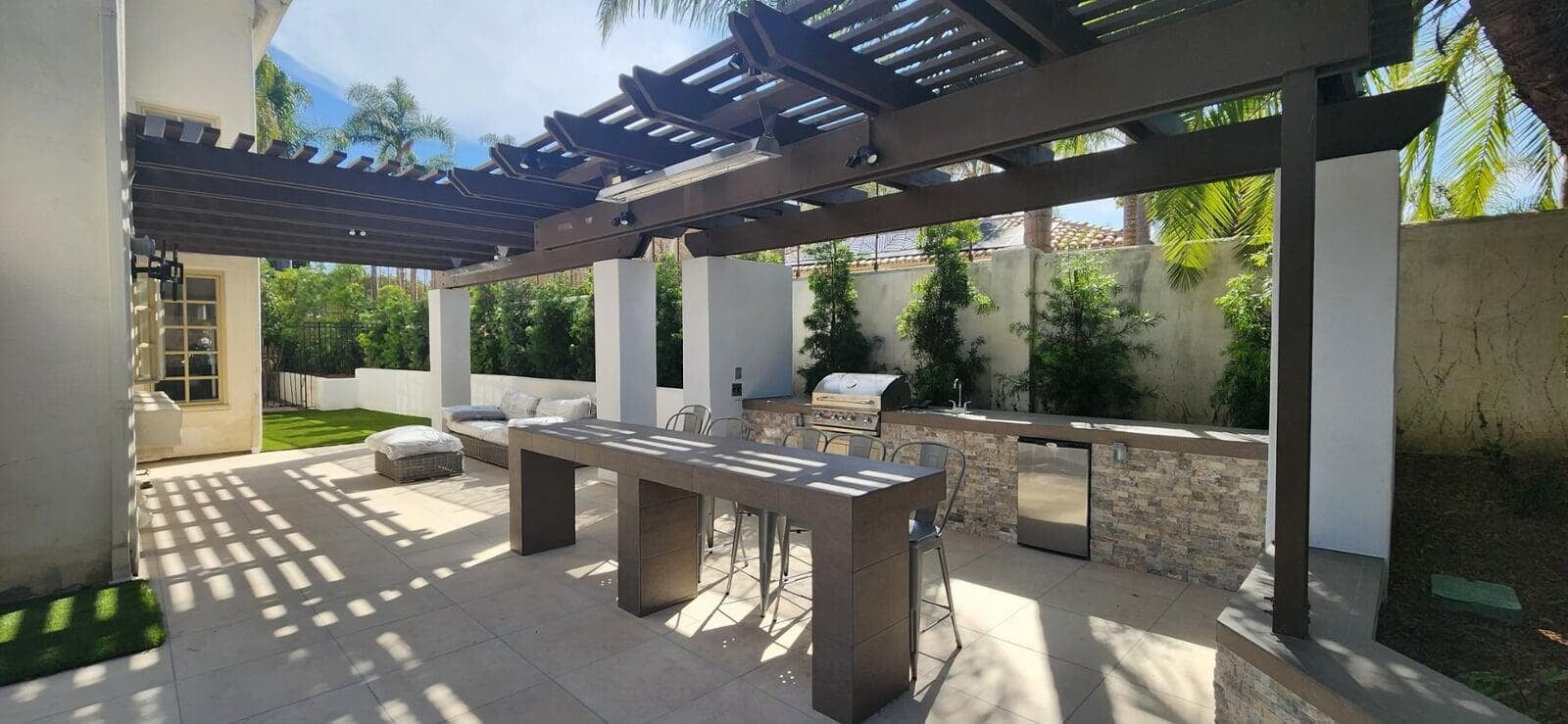
The layout is the part that gets used.
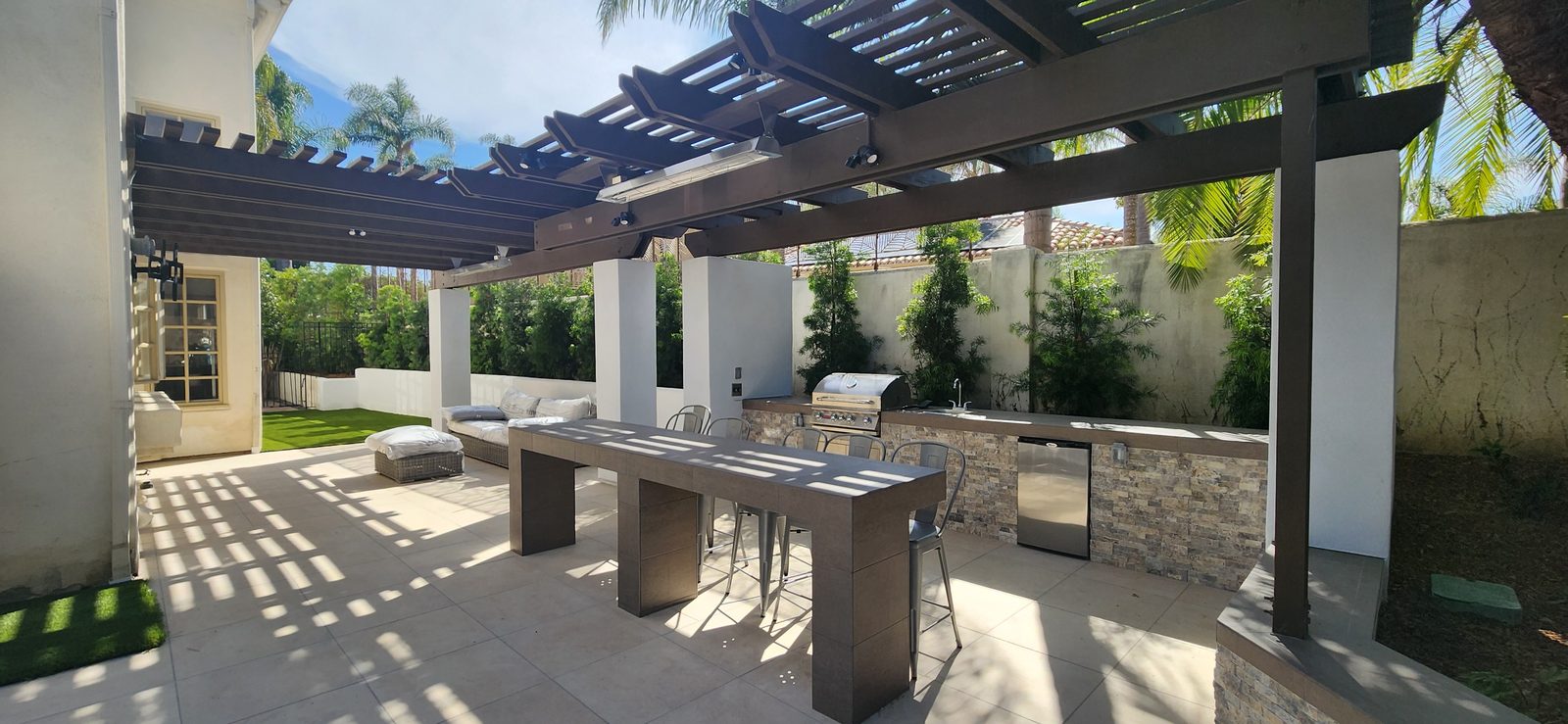
An outdoor kitchen lives or dies on how it works while you are cooking. The cook needs counter on both sides of the grill, the trash and the fridge within a step, and the guests on the far side of the bar so they are close but not in the heat. Put the grill where the smoke blows into the seating, or strand the cook with nowhere to set a platter, and a good-looking island becomes the thing nobody uses past the first summer. We lay out the work triangle and the traffic flow first, then build to it.
The other half of the conversation is materials — and this is where most quotes go quiet. The same BBQ footprint can run about $4,000 or about $12,000 depending on the grill, the counter, the cabinetry, and the finish you put on it. Same size, two to three times the cost. Other contractors hand you one price and let you assume that is what an outdoor kitchen costs. We walk you through the choices — where a better grill earns its keep, where a porcelain counter beats stone for your use, where you can spend less without regretting it — so you make the right call for your budget.
Underneath all of it sits a load-rated slab so the masonry stays flat and the grout stays tight. We have built outdoor kitchens this way since 1984, and we carry the ten-year structural liability on every pad we pour.
What’s included.
- A layout built around the cook, the traffic, and where your guests gather — plus a load-rated slab under it
- Built-in grill set into block or framed masonry, with side burners and any specialty cookers you spec
- Refrigeration, ice, and storage — corrosion-rated stainless units built into the run
- Bar and counter in granite, porcelain, sealed concrete, stone, or tile, set to drain and resist heat and UV
- Gas line buried to code depth, electrical circuits, and any plumbing for a sink or ice maker, run in-house
- Shade structure or pergola, engineered and permitted, with clearance and ventilation for the grill
- Low-voltage task and accent lighting across the counter, bar, and overhead structure
- A level pad, finish materials, and an integrated transition where the kitchen meets the deck
Our process.
How you cook
We talk through how you grill, serve, and host — who cooks, how many you feed, where people gather — and walk you through the material choices that move the budget. The layout and the spend get figured out before a single number is priced.
3D & materials
You see the kitchen in 3D before we pour — layout, counter heights, and where everyone stands. We price the materials as line items so you can see the trade-offs, with the slab, gas, and electrical detailed right alongside.
Slab to finish
Footings, slab, gas and electrical, masonry, appliances, counter, shade, lighting, finish. Every phase runs in-house, in order, with one crew accountable for the one before it.
Startup & warranty
We test the gas, fire the grill, check the electrical, and walk you through running it. Then the ten-year structural liability is ours — on the slab, the footings, and the masonry.
Why bring us your kitchen.
Forty years, same owner
Darren Earl has been building outdoor kitchens in San Diego County since 1984. He has seen which slabs heave, which counters crack, and which finishes survive the sun and salt. The owner prices the job and has carried the ten-year structural liability on it for four decades. His in-house crew, not a rotating cast of subs, builds it.
One team, no subcontractors
Most outdoor kitchens pass through a chain of subs — one pours, one runs gas, one sets masonry, one wires it — each blaming the last when the slab cracks or the gas fails inspection. We run every phase in-house. One contract, one number to call, no seam between trades for a problem to hide in.
Ten-year liability, clean record
California holds the builder structurally liable for ten years on the slab and masonry. We carry that on every kitchen, and we have carried it clean for forty — zero structural complaints. That exposure is why we engineer the pad and the gas runs instead of just laying block on a patio.
Kitchen questions, answered straight.
Tell us about the kitchen.
Tell us how you cook and host — weekend grilling, big crowds, a full second kitchen — and we’ll lay out the spot, walk you through the materials, and give you a fixed-price concept. No charge for the visit.
Saturday · By appointment
Sunday · Closed
We’ll be in touch within one business day to schedule the visit.